Bean Rosaries
Welcome,
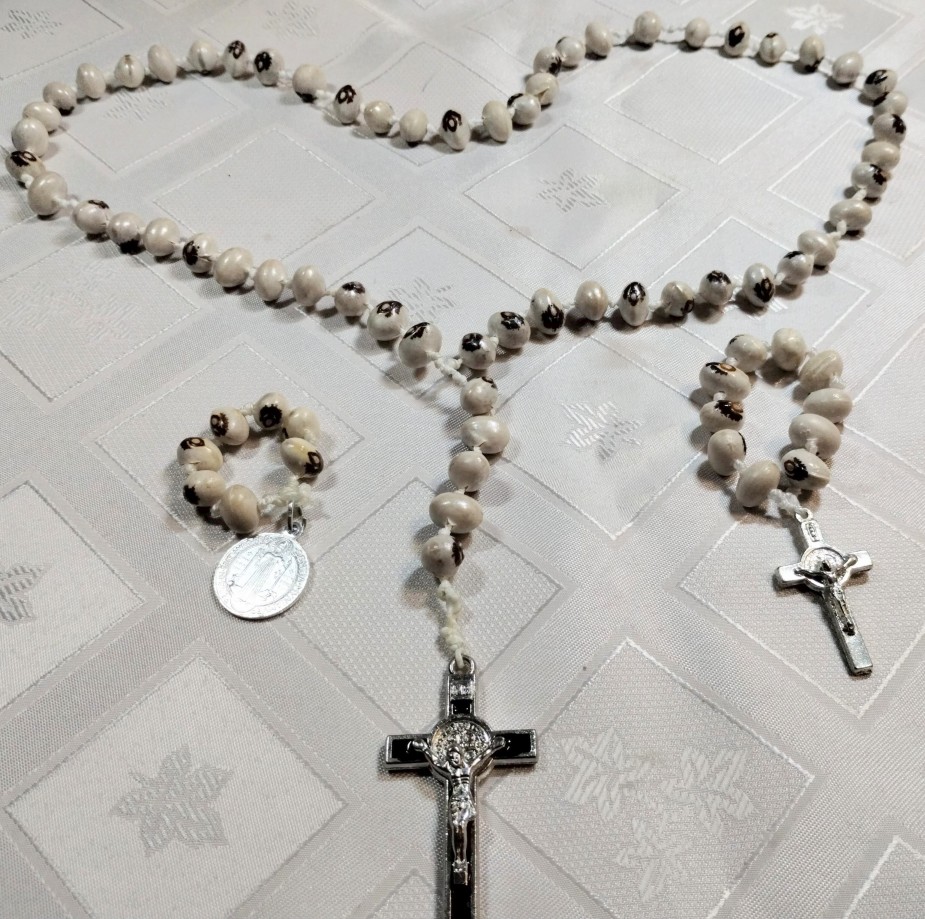
Our journey with the Bean Rosaries began when my mother received a bean from someone that bore a beautiful pattern resembling a monstrance with the Holy Host.
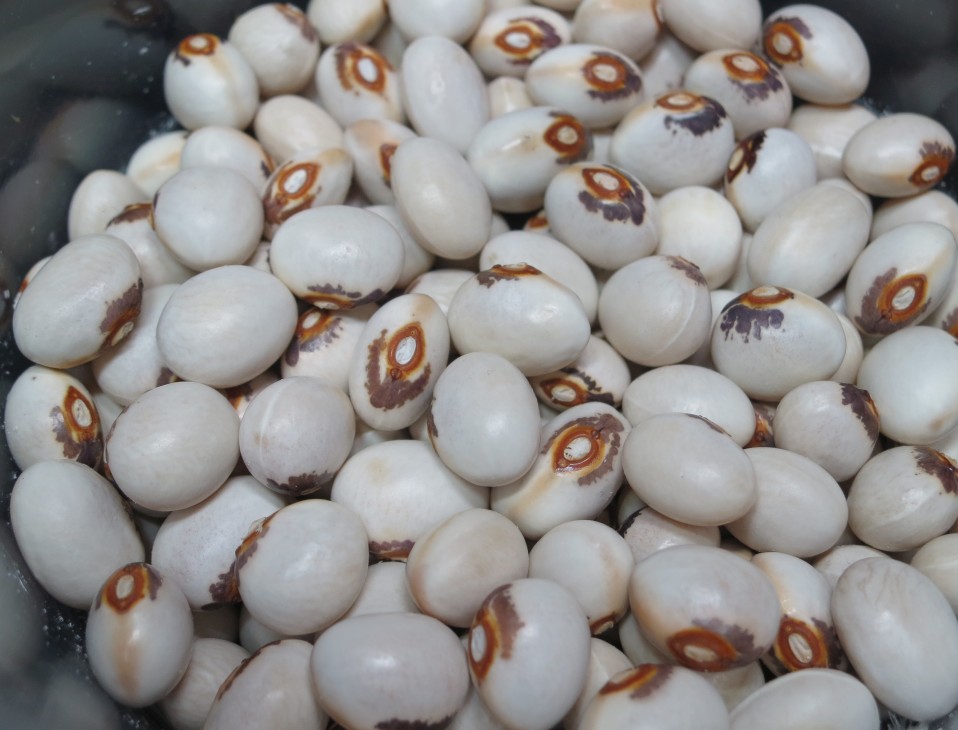
It turned out that nothing had been painted or engraved – the beans naturally develop this unique marking.
After a short search online, we found some information about these remarkable beans. The original sources are available at the end of this page (in Polish).
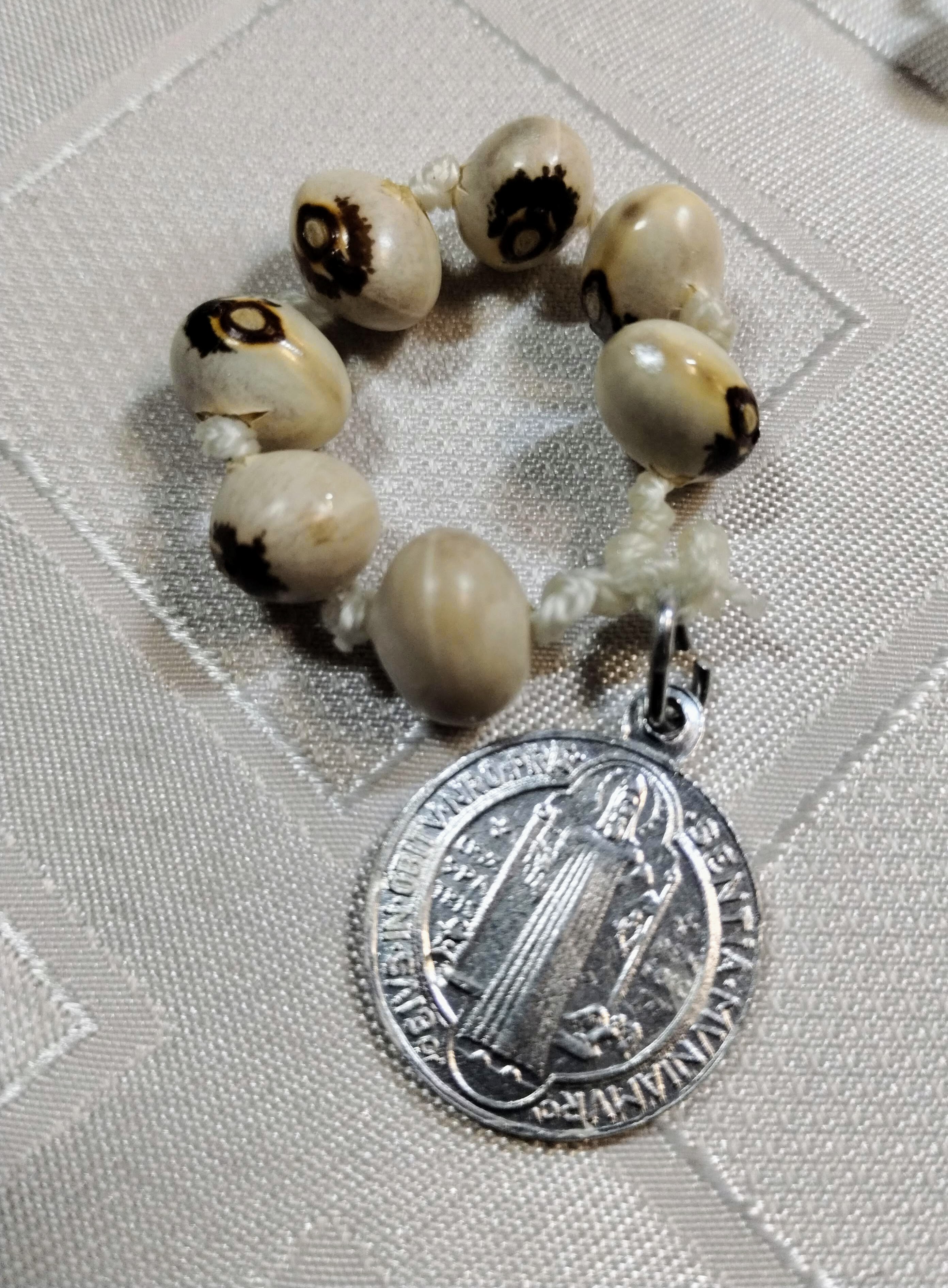
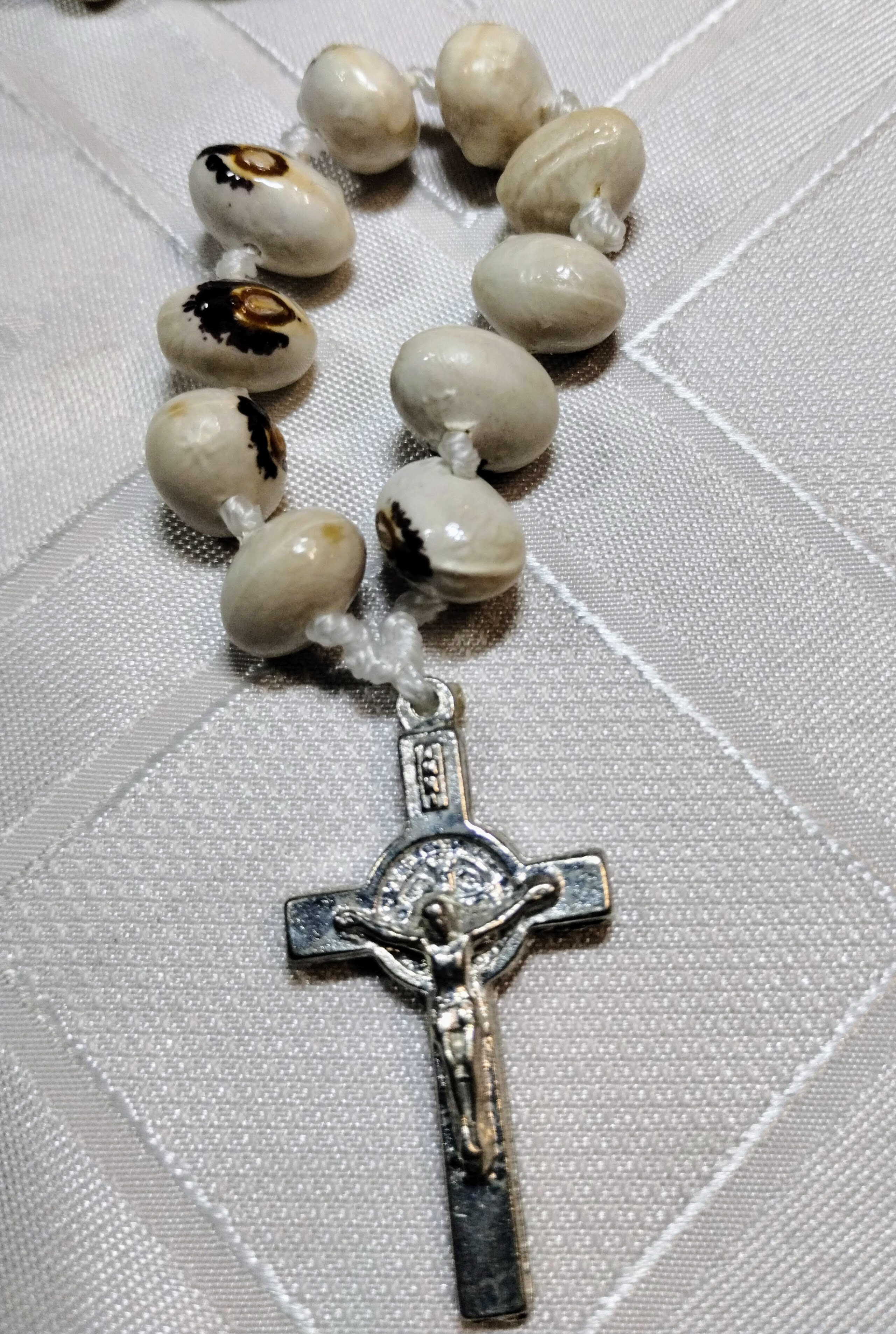
My mother planted a few of the beans and began making single Rosary decades, Seven Sorrows Rosaries (devoted to the Seven Sorrows of the Blessed Virgin Mary), as well as full Rosaries, which she gave to family and friends.
The following year she planted more beans, and the year after that even more.
Since then, our garden has been transformed into a little bean plantation every year. 🙂
My mother personally plants, waters, and cares for the plants (including fighting off hungry slugs 🙂), then harvests the beans and, in autumn, carefully handcrafts Rosaries from them.
As she makes each Rosary, she prays for the person who will receive it.
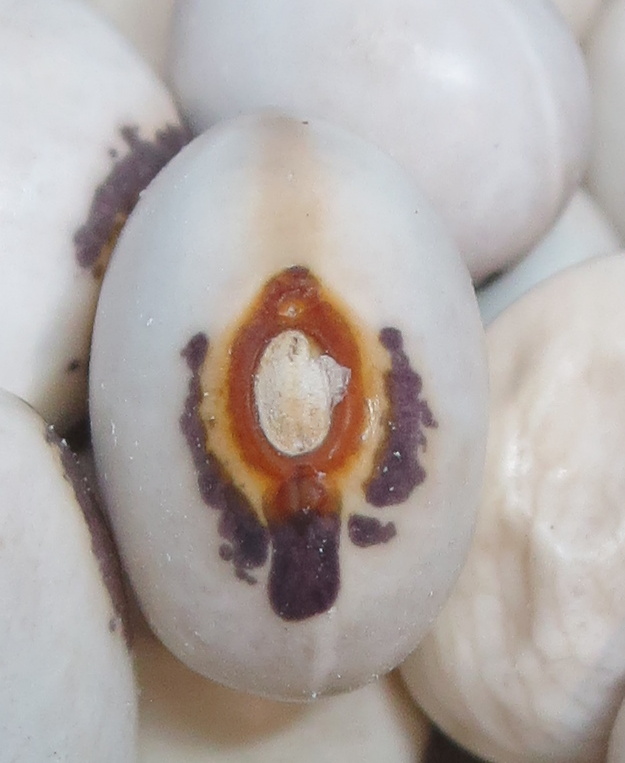
The Story of the Bean Bearing the Image of the Holy Host
During the French Revolution, when the Catholic clergy and the Church were regarded as enemies of the people, the clergy were widely persecuted and anything connected with the Catholic faith was systematically destroyed.
At that time, in the region of Alsace, which became part of France during the Revolution of 1789, an extraordinary event is said to have taken place. Many believe it to have been a wonderful gift – a Eucharistic miracle – whose fruits can still be admired today.
This story was preserved for generations through the oral tradition of the people of Alsace. Two hundred years later, in 1989, M. F. de Bussang recorded and published it, bringing the story back to public attention and making it known around the world.
Here is the story:
“During the anti-Catholic French Revolution, when the clergy were persecuted and it was forbidden to keep the Blessed Sacrament, the parish priest of a small village in Alsace—whose name has since been lost—became increasingly concerned about the growing terror of the revolutionary brigades threatening his parish.
Unable to find a safe place to hide the Blessed Sacrament, he sought the advice of his housekeeper. Despite the great danger to herself and to the entire village, she suggested hiding the monstrance containing the Blessed Sacrament in her bean field, where beans were growing on poles.
The monstrance remained hidden there until the revolutionaries finally left the area.
During the autumn harvest, the woman made a remarkable discovery. Every single bean bore mysterious brown markings, even though she had planted only pure white seeds. She took several of the beans to show the parish priest, who immediately recognized the image of a small Holy Host enclosed within an ornate brown monstrance.
Seeing this, he said to his astonished parishioner:
“My dear lady, this is a sign of gratitude for your courage and your deep faith. Had the Hosts hidden in the field been discovered, both you and I would have been executed, your home would have been burned, and perhaps even the entire village destroyed.”
Sources (in Polish):
https://radioniepokalanow.pl/nie-ma-jak-u-mamy-niezwykly-cudowny-rozaniec-z-fasoli/
More information about growing these beans:
http://www.bezogrodek.com/2015/12/fasola-eucharystyczna-z-hostia.html
Contact:
rozaniec-z-fasolek@wp.pl